Jobs
Salaries starting at ¥1,300/hour for cleaning jobs in Japan!
See the most common and active cleaning jobs in Japan, understand what each role entails in hotels, buildings, hospitals, and factories, compare hourly and shift wages, and follow a straightforward step-by-step guide to applying!
Advertisement
Understand where the opportunities are, how much they pay, and what you need to quickly enter the field.

In recent years, the search for cleaning jobs in Japan It continues to grow and attract thousands of candidates over time, and that's because cleaning is an indispensable service in all environments across the country.
At the same time, it's not "just one type of job." Because cleaning is needed in hotels, commercial buildings, healthcare settings, logistics, and public spaces, there's a type of job for every preference, which makes this profession very special!
Therefore, to help you understand everything about these job openings, we've covered topics such as why there are so many vacancies, what the most common roles are, average salary, how shifts and contracts work, what companies typically ask for during hiring, and how to apply.
Therefore, if your goal is to enter the sector or change environments within it, keep reading, because you will leave here knowing exactly everything you need to take the first step towards a new job.
Why are there so many cleaning job openings in Japan today?
The first reason is simple: Japan's organizational model relies on well-defined and monitored daily cleaning processes. In commercial buildings, trains, hotels, clinics, and industries, there are strict maintenance routines to ensure safety, comfort, and continuous operation.
High demand
This creates a constant demand for professionals in this area. Furthermore, the facilities management sector (outsourced cleaning, building maintenance, and general services) has grown significantly in recent years.
Many companies prefer to hire specialized teams through service providers, which increases the volume of job postings and the turnover between projects and locations. Therefore, vacancies frequently arise in different regions and shifts.
Highly dynamic work
Another factor is the dynamics of the work itself. Cleaning has a natural turnover rate, and while some people prefer temporary jobs, others move to internal roles in hotels, hospitals, or factories, and some stop due to personal changes.
Thus, this constant "turnaround" opens up new opportunities almost every week, especially in urban areas.
Structural change in the market
Finally, there is a structural change in the Japanese labor market. That is, with an aging population and fewer young workers entering the workforce, essential sectors need to continually replenish their workforce.
Most Common Types of Cleaning Jobs
Hotel and accommodation (Housekeeping)
This is one of the most consistent aspects of cleaning, because hotels, ryokans, and accommodations need to maintain a high standard every day. The routine typically includes:
- Room and bathroom cleaning (Complete sanitization, replenishment of paper/towels/amenities).
- Changing bed linens and general organization of the environment.
- Vacuuming and dust removal on floors, furniture and surfaces.
- Common areas such as hallways, elevators, and reception areas at specific times.
The rhythm is usually well timedIn large hotels, teams are fixed and clearly divided by floors/wings. It's direct work with visible results, and that's why positions remain open year-round.
Building and office cleaning (ビル清掃 / オフィス清掃)
It is one of the areas with higher volume of hiringBecause commercial buildings and offices require daily maintenance—before, during, or after business hours. Typical tasks include:
- Floors and corridors (sweeping, mopping, simple polishing).
- Bathrooms and changing rooms (Complete sanitization and item replenishment).
- Lobbies, meeting rooms and areas (cleaning surfaces, taking out trash, basic organization).
- Waste collection and separation in accordance with the building's standard.
- In some cases, glass and outdoor areas with specific equipment.
Routine usually comes in checklists with the right order and estimated time. It seems simple, but it requires consistency and attention to detail, because the building's standard is usually monitored.
Hospitals and clinics (病院清掃)
Here, cleanliness is stricter protocolThis is because it involves sensitive environments. It's not just about "cleaning": it's about following prevention and control standards. This typically includes:
- Enhanced hygiene of bathrooms and common areas.
- Zone cleaning (waiting areas, corridors, bedrooms, specific rooms).
- Correct use of PPE and specified products by the hospital.
- Dispose of according to internal rules.
Some places require more formal initial training, but many positions accept beginners with on-the-job instruction. In this area, the advantage is that the work tends to have a routine. stable and predictablewith a more fixed scale.
Factories, logistics centers and industrial areas (工場清掃)
This type of job opening is very common in industrial centers because factories need to maintain... clean and functional environment Within regulations. In general, it's a light industrial cleaning:
- Floor and circulation areas, removing dust and common debris.
- Cleaning of support areas (internal courtyards, changing rooms, dining halls).
- Simple organization of the environment, for safety and flow.
- Collection and removal of non-hazardous waste.
Depending on the location, there are specific safety rules (restricted areas, movement routes, use of helmets/gloves). It's a strong option for those who prefer open spaces, a more physical routine, and working in larger teams.
Large facilities and public spaces (施設清掃)
This group covers a wide variety of locations that receive a high flow of people every day, such as:
- Shopping malls and shopping centers
- Schools and gyms
- Stations and transport areas
- Cultural centers and public buildings
- Residential condominiums
The focus is on maintaining cleanliness. continuous collective use...with increased security in restrooms, hallways, entrances, and passageways. Many positions are for early morning shifts (before opening) or afternoon/evening shifts (after closing). However, there are also daytime maintenance posts available during peak hours.
It's a type of work that's in high demand because cleanliness here directly impacts the experience of those using the space, so the teams need to be consistent.
Salaries and benefits: how much does a cleaner pay in Japan?
In general, the sector works with two main benchmarks: Hourly pay for part-time/paato/arubaito and monthly salary for permanent contracts (keiyaku/seishain).
On national job and salary platforms, the average reported salary for "cleaning staff" in Japan is in the range of around ¥1,300–¥1,400 per hour, varying by region and function.
Full-time
When the position is full-time, salary surveys indicate annual averages close to 2.6 million pounds for hotel housekeeping and about ¥3.7 million for building cleaningbefore bonuses and additional charges. These estimates reflect the overall market and help to compare areas.
It's also worth remembering that the variation is significant. In central areas of Tokyo, Kanagawa, Osaka, or tourist regions, the hourly rate tends to be higher, either due to local costs or continuous demand.
However, on the other hand, smaller cities may pay a little less because they offer more relaxed routines and shorter commutes. But don't get hung up on that, because you can't decide solely based on the number... sometimes a "smaller" job is worth it because it's close to home, has fixed shifts, and less wear and tear.
Benefits
Regarding benefits, the most common ones are transport subsidy, uniform, on-site trainingand, in stable contracts, shakai hoken (social security), proportional vacation pay, and bonuses for attendance or performance.
Furthermore, during night shifts and early morning hours, there may be... additional hours and, in some settings, extra charges apply for special areas (high windows, equipment, hospital protocols).
What makes the value increase?
Finally, what makes a salary go up? Experience counts, but... constancy and proven quality They weigh more. Therefore, those who master the checklist, meet standard deadlines, and maintain a professional attitude are usually recommended for better locations, fixed routes, or shift leadership positions.
Work Schedule and Formats for Cleaning Positions
The cleaning sector is known for offering various formats, as we've already mentioned. One of them is... Part-time (パート/アルバイト) which is very common and is suitable for those who want short work hours, to supplement their income, or to fit work into specific schedules.
But we also can't forget about full-time (契約社員/正社員) This is a common situation in large hotels, hospitals, factories, and building cleaning teams. The advantage here is having a fixed monthly income, a more stable schedule, and comprehensive benefits. The requirements tend to be a bit higher, but nothing out of the ordinary.
Regarding shifts, the three most common patterns are: early morning, daytime and nightThe morning shift exists because many locations need to be ready before opening. The day shift covers ongoing maintenance in high-traffic areas. The night shift takes place after closing.
But this isn't a hard and fast rule; the workload can vary depending on the location. In hotels, for example, weekends and holidays can be busier, while offices tend to be more demanding from Monday to Friday.
What They Ask for When Hiring (Real Requirements)
When it comes to requirements, it's common to get scared or afraid of not having what's needed, but rest assured! The good news is that, in the vast majority of job openings, Prior experience is not required.This is because the sector typically uses training to teach the company's standards.
The truth is that what companies are really looking for is daily reliabilityPunctuality, consistent presence, ability to follow instructions, and attention to detail count for more than a long resume.
In addition, physical requirements are frequent. Often it is necessary to stand for long periods, pull carts, use vacuum cleaners or light equipment, go up and down stairs, and repeat movements. But don't despair, because if the place is large, the work is almost always done in teams.
However, some specific positions usually require something extra. In hospitals, for example, there may be a requirement to follow protocols, and in industries, stricter safety rules. However, this "experience" is usually gained over time.
How to apply the right way (step by step)
Step 1:
First, organize your professional history. Even if you've never worked in cleaning, experiences in customer service, logistics, kitchen, maintenance, factory or retail They already demonstrate discipline, routine, and physical ability.
Furthermore, companies value prior job stability more than job titles.
Step 2:
Second, prepare a simple and honest resume. There's no need to "embellish" it: in cleaning, recruiters mainly look at your availability, place of residence, practical experience, and how long you intend to stay. Therefore, be clear about the shifts you accept and your weekly routine.
Step 3:
Third, apply in bulk and with a smart filter. Large websites such as Baitoru and others They compile thousands of cleaning job openings, filtered by city, season, hourly wage, and shift type. This way, you can quickly create a list of candidates.
Furthermore, to see the active job openings right now, click on the following link and search directly on this official website. Safely!

Step 4:
Fourth, prepare for objective interviews. They usually ask three things:
- your actual availability of time,
- If you have any physical limitations,
- It is possible to maintain a constant presence.
Speaking calmly demonstrates responsibility, shows an understanding of the job, and conveys confidence. Therefore, prepare well to increase your chances of being hired.
Step 5:
Fifth, read the contract carefully before starting. Confirm the shift, exact location, tasks included, hourly/monthly rates, transportation allowance, and absence policies. If there is a trial period, understand how it works.
Conclusion
The cleaning sector in Japan is large, essential, and remains strong because it sustains the daily functioning of almost all social and economic environments. Therefore, job openings are constantly appearing in different locations, shifts, and formats, allowing everyone to find what they prefer.
In this sense, throughout the article, we have seen that there are several types of work—hospitality, buildings, health, industry, and public spaces—and that each has specific tasks.
It also became clear that the real requirements are simple: consistency, punctuality, attention to standards, and a willingness to learn the local process. Even without experience, there are entry points, provided the attitude is serious.
Now the next step is practical… go back to the step-by-step guide, access the official website, choose the type of vacancy that matches your profile and schedule, and apply with confidence! But don't stop there, check out some of the vacancies available at one of the largest supermarket chains in the country!
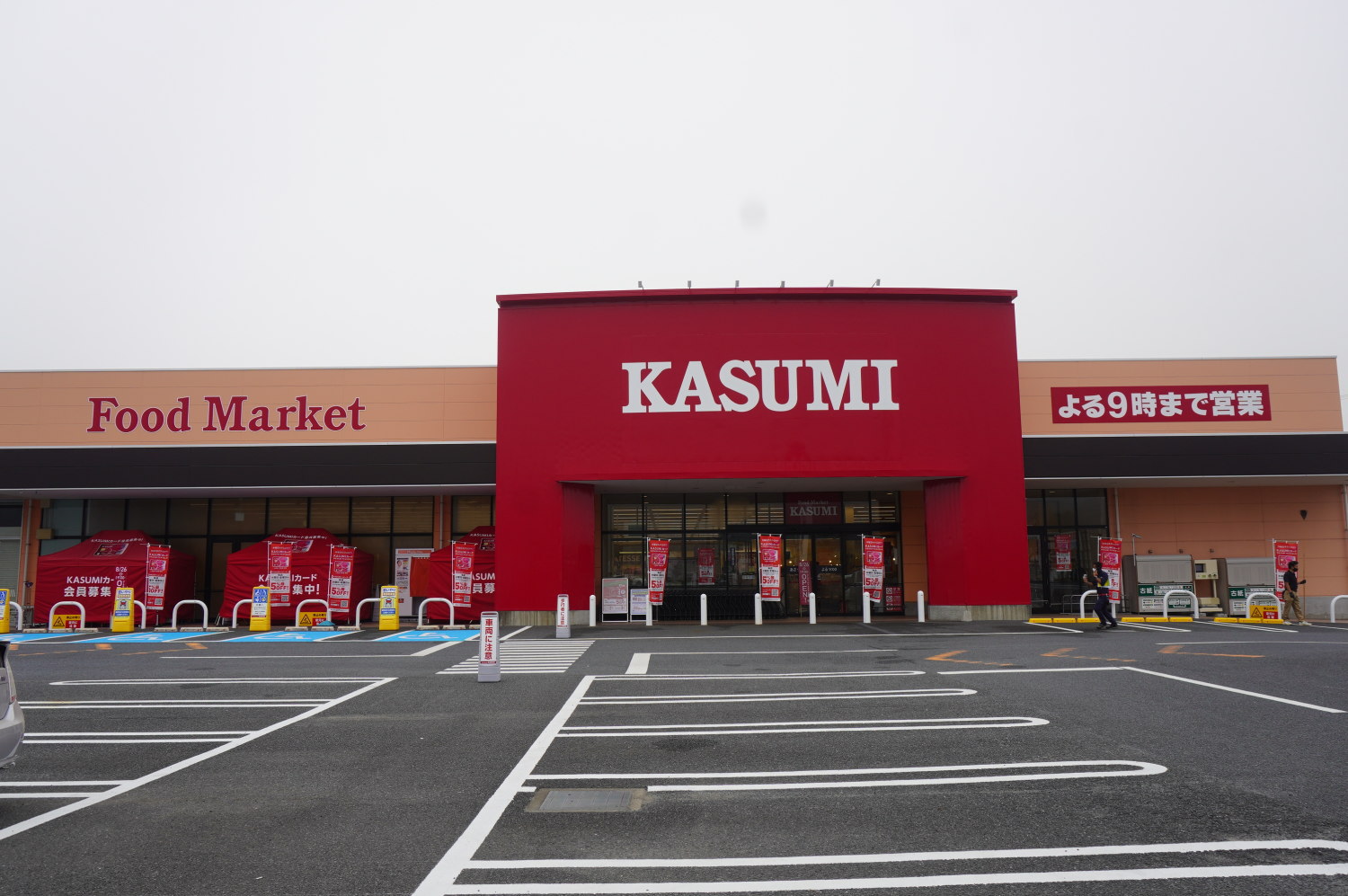
Job openings at Kasumi
Find more job openings and opportunities by reading this article! Click to learn more.
Trending Topics

The Ultimate Guide to Mastering Game Creation in Roblox
Learn step-by-step how to master game creation on Roblox and turn your ideas into playable, profitable experiences.
Keep Reading
Dating Apps for those who have ended a relationship: Check it out!
Start over after finishing! Discover the best Flirting Apps for those who have broken up and open up to new love stories.
Keep Reading
Financial Control in the Palm of Your Hand: A Complete Guide to Using Mobills Efficiently
Want more money at the end of the month? Learn how to control your finances and plan each expense intelligently with Mobills.
Keep ReadingYou may also like
Discover the best apps to clean your cell phone's memory and make it lighter!
Discover the best apps to clean your cell phone's memory and make your device as fast as new with tips that really work!
Keep Reading
Top Dating Apps: See How to Find a Company
Find love with ease! Dating apps offer an exciting way to connect with compatible people.
Keep Reading